Home About Investing Savings Contact Get Started

Savings & Emergency
Fund Essentials

Build a robust financial cushion before investing. Your savings discipline today creates the stability that makes everything else possible.

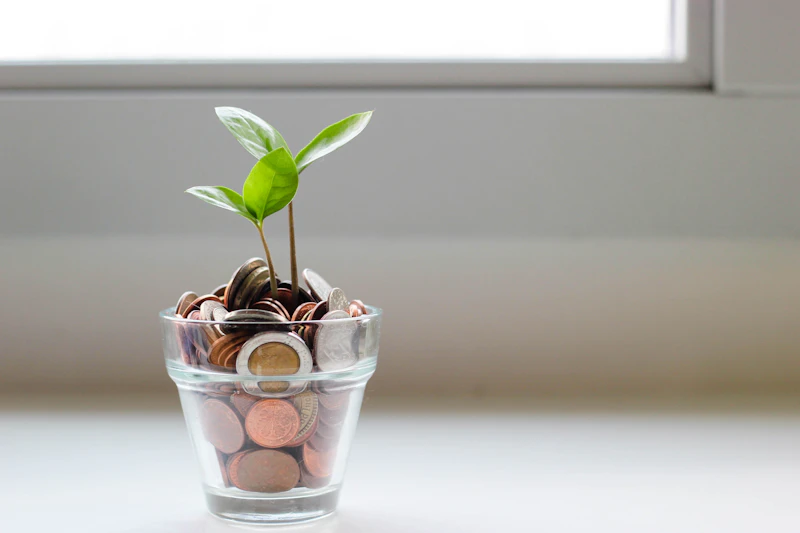
Savings jar and financial planning

Why Savings Come
Before Investing

Many new investors skip straight to the markets without a financial foundation in place. This is a common and costly mistake. Without savings as a buffer, any unexpected expense — a medical bill, car repair, job loss — forces you to liquidate investments at the worst possible time.

A solid savings habit and emergency fund are the bedrock on which all other financial goals are built. They provide peace of mind, prevent debt spirals, and allow your investments to compound without interruption.

  • Prevents forced investment liquidation at market lows
  • Eliminates reliance on high-interest credit in emergencies
  • Provides psychological security that improves financial decisions
  • Creates a launchpad for systematic investing

Building Your Emergency Fund

An emergency fund is a dedicated cash reserve for unplanned, necessary expenses. It is not for holidays, large purchases, or investments.

Saving money in a jar

How Much Should You Save?

The widely accepted target is 3 to 6 months of essential living expenses. This covers: rent/mortgage, utilities, groceries, insurance, minimum debt payments, and essential transport.

1

Calculate Your Monthly Essentials

List every non-negotiable monthly expense. Exclude dining out, subscriptions, and non-essential spending.

2

Set Your Target

Multiply your monthly essential expenses by 3 (stable employment, dual income) or 6 (self-employed, single income, irregular work).

3

Open a Dedicated Account

Keep emergency funds in a high-yield savings account, separate from daily spending. Easy access but not instant-spend temptation.

4

Automate Contributions

Set up an automatic transfer on payday. Even £50–100/month will build the fund within 1–2 years.

Savings Growth Calculator

Estimate how your regular savings contributions grow over time with compound interest. For educational illustration only.

Future Value Estimator

Estimated Future Value
$0
Assumes monthly compounding. Illustrative only — actual returns vary.

Proven Methods to Save More

Choose the budgeting approach that fits your personality and lifestyle.

50/30/20 Rule

Allocate 50% of after-tax income to needs (housing, food, transport), 30% to wants (dining, entertainment, hobbies), and 20% to savings and debt repayment. Simple to implement and flexible enough for most households.

Zero-Based Budgeting

Every pound/dollar of income is assigned a job — expenses, savings, or investments — until your budget reaches zero. This method maximises intentionality and leaves no money unaccounted for. Popular with people who want complete control of cash flow.

Envelope / Cash Stuffing

Physically (or digitally) separate money into labelled categories at the start of each month. When an envelope is empty, spending in that category stops. Particularly effective for impulse spending and discretionary category overruns.

Choosing the Right
Savings Account

Not all savings accounts are equal. Understanding the differences helps you maximise the return on your emergency fund and short-term savings.

  • High-Yield Savings Account (HYSA): Offered by online banks, typically paying 3–5% APY in current rate environments. FDIC/FSCS insured. Best for emergency funds.
  • Money Market Account: Similar to HYSA but may offer cheque-writing and debit card access. Slightly higher yields in some cases.
  • Certificates of Deposit (CDs / Fixed-Rate Bonds): Lock money for a fixed term (3 months – 5 years) for guaranteed higher rates. Not suitable for emergency funds due to withdrawal penalties.
  • Treasury Bills: Government-backed short-term securities with competitive yields. Accessible via Treasury Direct or brokerage accounts.

Always verify that your savings account is covered by your country's deposit guarantee scheme (FDIC in the US, FSCS in the UK, deposit guarantee schemes in the EU). Coverage limits vary by jurisdiction.

Banking and savings concept

Savings FAQs

Generally, build a small starter emergency fund (£500–1,000 / $1,000) first, then aggressively pay off high-interest debt (credit cards, payday loans). Once high-interest debt is cleared, build the full 3–6 month fund before investing. This order prevents debt relapse when emergencies arise.
Emergency funds are for unexpected, necessary, urgent expenses: job loss, medical bills, essential car or home repair, or sudden family financial need. Holidays, sales, planned annual expenses (insurance renewals, car MOTs), and discretionary spending do not qualify. Create separate sinking funds for planned irregular expenses.
Start with a very small amount — even £20/$20 per month matters. The habit is more important than the amount initially. Review all subscriptions and recurring expenses for immediate cuts. Seek additional income sources. Track every expense for 30 days to identify genuine savings opportunities. Progress, even small, compounds psychologically as well as financially.
No. Emergency funds must be in cash or near-cash equivalents (HYSA, money market funds) — instantly accessible without risk of loss. Investing emergency funds in stocks means you may need to sell at a market low precisely when you can least afford to. The purpose of an emergency fund is certainty, not returns.
A sinking fund is money set aside for a known future expense — a new car, annual insurance, holiday, or home renovation. You predict the cost and timeline, then save a proportional amount monthly. An emergency fund covers the unpredictable. Both are essential for comprehensive financial planning and should be kept in separate accounts.

Savings Built. Now Grow It.

Once your emergency fund is in place, explore our investment guides to put surplus savings to work.

Investment Strategies Ask a Question